Wine, culture & continuity

A history still being written.

Andalusian wine belongs to a long conversation between land, trade and culture. Ancient vineyards, Atlantic cellars and today’s renewed interest in local grapes are chapters of a continuous, changing story.

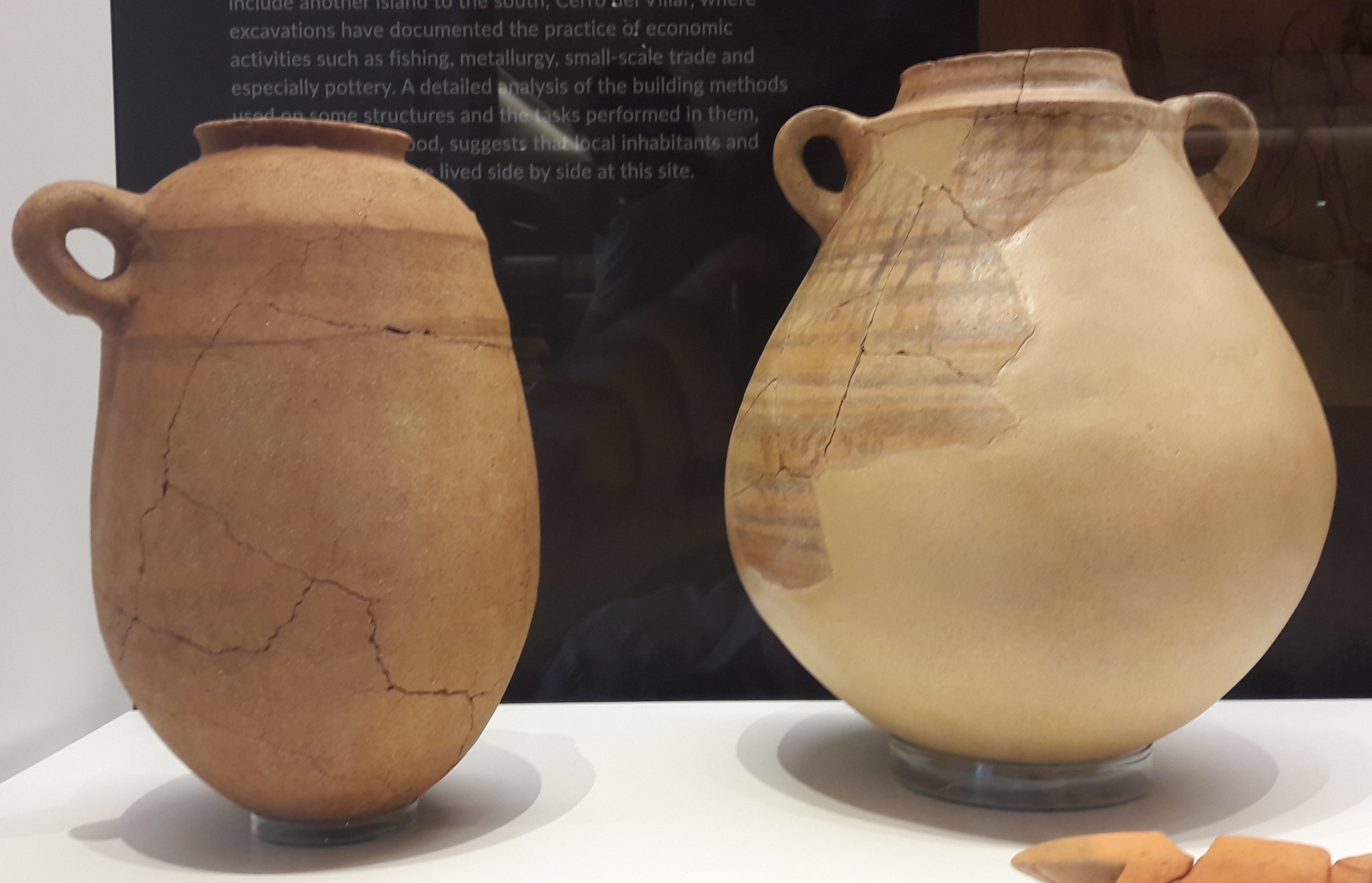
Phoenician amphorae displayed in the Museo de Málaga
Phoenician amphorae, Museo de Málaga · Tyk / CC BY-SA 4.0 · Image attribution

Eight chapters

A vineyard can disappear from a hillside. A culture changes in more complicated ways.

01 First millennium BCE

Vines on Mediterranean shores

The Phoenician settlement of Doña Blanca, beside the Bay of Cádiz, was occupied from the eighth to the late third century BCE. Archaeology in the surrounding Sierra has also identified a winery dated to the third century BCE. These remains place wine within a Mediterranean world of settlements, agriculture and exchange — a more useful starting point than assigning Andalusia a single, legendary first vintage.

Sources: El Puerto de Santa María tourism

02 Roman period

Wine within a trading landscape

Under Roman rule, the Cádiz area exported wine alongside olive oil and preserved-fish products. Columella, the agricultural writer born in Cádiz, discussed the care of vines and the making of wine. This is evidence of an established wine culture, not proof that a Roman wine tasted like a present-day Sherry.

Sources: Consejo Regulador Jerez-Xérès-Sherry and Manzanilla

03 Eighth–fifteenth centuries

The many lives of the vine in al-Andalus

Islamic restrictions on alcohol did not erase viticulture. Research presented by the University of Córdoba describes vines as an important Andalusi crop: grapes supplied raisins, syrups, vinegar and other foods, while wine also appears in medicinal and cultural contexts. Cultivation knowledge and grape diversity continued to develop. Practices differed across time and communities; neither universal abstinence nor unrestricted wine drinking describes the whole period.

Sources: University of Córdoba, UCC+i

04 Late Middle Ages–eighteenth century

Ports, merchants and the shape of the cellar

After the Castilian conquest of Jerez in 1264, land redistribution and planting helped reshape its wine economy. Later northern European demand encouraged longer ageing. From the late eighteenth century, changes to trade restrictions, larger bodegas and the development of criaderas and solera helped give Jerez’s wines their recognisable modern form. The ancient roots and the later cellar system belong to different stages of the story.

Sources: Consejo Regulador Jerez-Xérès-Sherry and Manzanilla

05 Nineteenth century

An export economy with many centres

Jerez and Málaga led major wine-export industries, alongside Montilla-Moriles, the Condado de Huelva and Granada’s Contraviesa. Elsewhere, vineyards supplied local markets; Axarquía produced raisins and Almería’s Andarax valley developed its trade in fresh grapes. Andalucía’s vine economy was already more diverse than its two most internationally familiar wine names.

Sources: Junta de Andalucía, Instituto de Estadística y Cartografía

06 1878 and the following decades

Phylloxera changed the map

Phylloxera was formally identified in Málaga on 10 July 1878. Historical research traces the infestation at La Indiana, in Moclinejo, to imported vine cuttings that arrived in late 1874. The pest devastated vineyards and livelihoods. Replanting proved especially difficult in Málaga; research into the crisis examines unsuitable planting choices as part of the explanation. It was a profound rupture in the vineyard landscape, not the disappearance of all Andalusian wine.

Sources: Francisco Manuel Pérez Hidalgo, University of Málaga; Aportes 110 (2022), pp. 103–134

07 Twentieth century

Survival, replanting and uneven recovery

Recovery differed from one district to another. Andalucía’s vineyard area expanded again in the early twentieth century, contracted during the Civil War and its aftermath, and recovered in the 1960s and 1970s before a later decline. Some former vineyards became olive groves; elsewhere wine production and cellar traditions persisted. This uneven history is why a story of a century-long regional silence is misleading.

Sources: Junta de Andalucía, Instituto de Estadística y Cartografía

08 The present chapter

Continuity meets renewed curiosity

Today’s diversity includes dry whites, rosés and reds alongside the celebrated sweet and flor-aged traditions. Sierras de Málaga’s council describes a range of still-wine categories, including sweet reds. In Ronda, La Melonera documents work to recover scarce historic grapes and bring them back into cultivation. These projects add new possibilities to a wine culture that has continued to evolve.

Sources: Consejo Regulador Vino Málaga · La Melonera

Living plant heritage

Four names worth remembering.

Conservation begins with individual vines and careful identification. These grapes invite a closer look at the people keeping local diversity in the vineyard.

Tintilla de Rota

A red grape strongly associated with Cádiz and Rota. The Sherry council’s history of Tintilla records its earlier prestige and later vulnerability. Its survival and renewed use deserve recognition without claiming it vanished everywhere.

Sources: Sherry Wines Council, 18 September 2018

Melonera

La Melonera traces this rare grape to an 1807 description by Simón de Rojas Clemente. The estate describes locating surviving vines and multiplying them for cultivation. This is a producer-documented conservation story; it is not evidence that regional winemaking itself had ceased.

Sources: La Melonera

Reading a wine’s identity

Place, style and history.

A place name is not a sweetness level

Málaga DOP includes dry as well as sweet wines. Its council distinguishes wines made without added alcohol from fortified categories. Calling every Málaga wine sweet or every sweet Málaga fortified hides that range.

Sources: Consejo Regulador Vino Málaga

A region contains more than one wine identity

Sierras de Málaga and Málaga are distinct designations. The province, its named vineyard areas and the designation on a bottle are related but different ways to describe origin. Our regional guides are geographical introductions, not a replacement for a wine’s label.

Sources: Consejo Regulador Vino Málaga · Consejo Regulador Vino Málaga

History should leave room for change

Ancient wine production does not establish an unchanged modern recipe. Likewise, preserving a scarce grape is different from reviving a whole region after an imagined absence. Dates are most useful when we explain what actually happened at them.

Sources: Consejo Regulador Jerez-Xérès-Sherry and Manzanilla

A few historical distinctions

1874 or 1878?

The Málaga study distinguishes the reported arrival of infected cuttings in late 1874 from the formal identification of phylloxera on 10 July 1878. We use 1878 for the recognised outbreak and explain the earlier introduction.

Sources: Francisco Manuel Pérez Hidalgo, University of Málaga; Aportes 110 (2022), pp. 103–134

Wine did not stop for a century

Losses, replanting, continuing production and later revival followed different regional paths. We describe those changes rather than invent a single period when all Andalusian wine disappeared.

Sources: Junta de Andalucía, Instituto de Estadística y Cartografía

Al-Andalus needs a nuanced account

Religious restrictions, non-alcoholic grape products, medicine and wine consumption all belong in the history. A simple story of total prohibition followed by total disappearance is not supported by the university research.

Sources: University of Córdoba, UCC+i

Read further

The sources behind this guide.

Municipal archaeology, university research, the regional historical atlas, regulatory councils and an attributed producer account. Sources reviewed on 22 October 2026.

  1. 01
    Yacimiento Fenicio de Doña Blanca

    El Puerto de Santa María tourism

  2. 02
    History of Sherry

    Consejo Regulador Jerez-Xérès-Sherry and Manzanilla

  3. 03
  4. 04
    Atlas de Historia Económica de Andalucía: El viñedo

    Junta de Andalucía, Instituto de Estadística y Cartografía

  5. 05
    El vino de Málaga tras la plaga de la filoxera. La crisis y los problemas de la replantación

    Francisco Manuel Pérez Hidalgo, University of Málaga; Aportes 110 (2022), pp. 103–134

  6. 06
    D.O.P. Málaga

    Consejo Regulador Vino Málaga

  7. 07
    D.O.P. Sierras de Málaga

    Consejo Regulador Vino Málaga

  8. 08
    Introducing Tintilla de Rota

    Sherry Wines Council, 18 September 2018

  9. 09

Meet the places carrying the story forward.

Explore the regional guides