Andalusia, region by region
Granada & Jaén
Mediterranean slopes, inland mountains and determined small producers: two provinces with distinct wine stories to discover.
A closer look
The place.
The wines.
The choices.
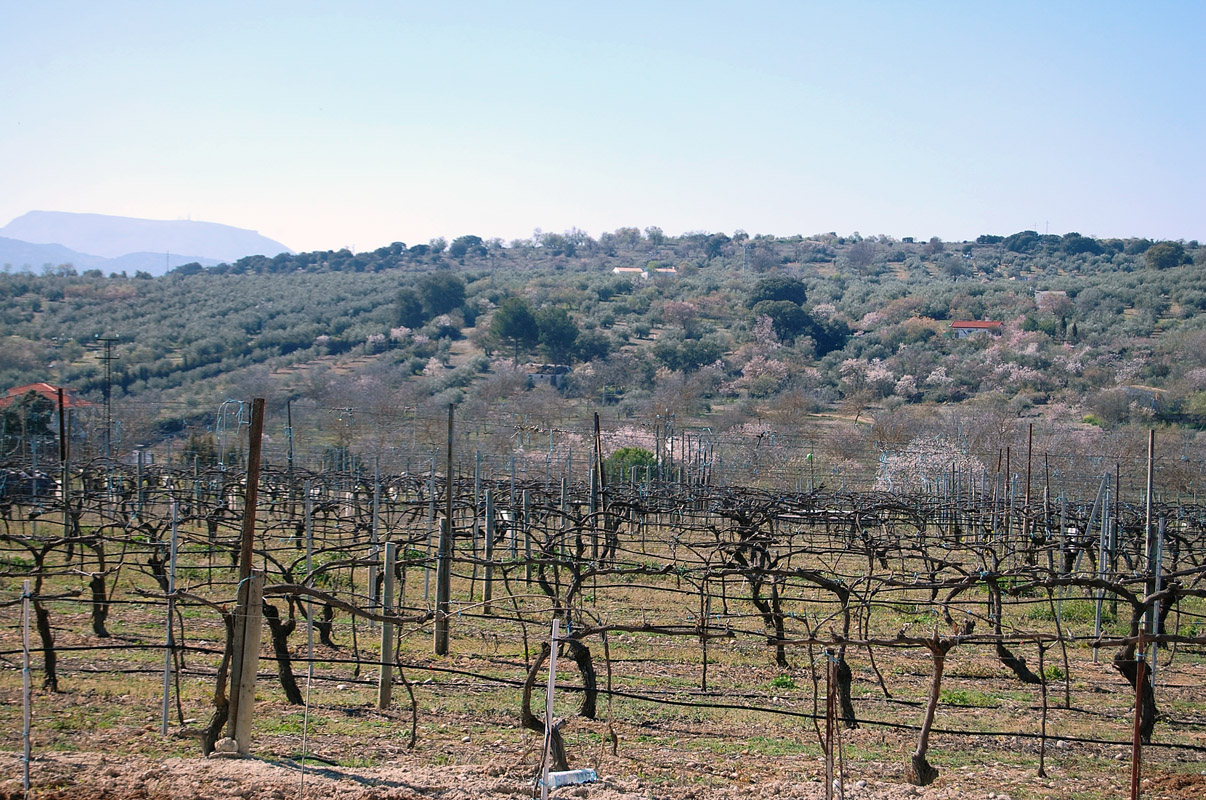
Granada’s council describes a wine territory shaped by mountain, continental and Mediterranean influences, with three named subzones: Contraviesa-Alpujarra, Geoparque-Norte and Poniente. Its wines include whites, rosés, reds and sparkling styles. Elevation matters, but grape, exposure and cellar decisions still deserve their own attention.
Jaén has its own producers and traditions. Marcelino Serrano in Alcalá la Real offers vineyard and cellar visits that connect wine with the town’s history. The directory also introduces producers in Frailes and the Sierra de Segura. These are distinct local stories, not an extension of Granada’s designation.
Grapes to explore
Vijiriega / Vijariego · Moscatel · Chardonnay · Sauvignon Blanc · Viognier · Syrah · Petit Verdot · Tempranillo · Merlot
Soil & site
The regional research includes schist, limestone and mountain alluvial contexts. Soil, exposure and elevation vary across Granada and Jaén’s individual estates.
Reading the landscape
Use the directory to move between Jete, the Lecrín Valley, the Contraviesa and Granada’s inland wine country, then explore Jaén through its own cellar doors. This guide follows wine geography across two provinces without promising a fixed touring itinerary.
Lees & terracotta
Oak & estate blends
Variety trials & sparkling
Read the regional and producer sources: Granada council — territory and wine styles · Marcelino Serrano — vineyard, cellar and local-history visits
A cultural landscape
The story around the glass.
Granada’s designation reflects the organisation of a continuing regional wine culture, while Jaén’s family cellars preserve and interpret local histories. At Marcelino Serrano, the published visit explicitly includes the medieval importance of the vine in Alcalá la Real. Wine tourism can open a door into that wider heritage.
Explore Andalusia’s wine historyPlanning a rewarding visit
- 01Build your visit around a particular locality and producer; the two provinces cover varied terrain.
- 02Confirm the cellar entrance, approach and access requirements with the winery.
- 03Check the language and tasting selection directly. A regional sparkling-wine category does not mean every estate makes or pours one.
People behind the landscape
Producers to explore.
A selection from the regional directory. Each profile brings together its wines, visitor information and source links so you can continue the conversation with the producer.
Jete / Granada
Calvente
- Grapes
- Moscatel, Chardonnay, Viognier, Cabernet Sauvignon, Syrah, Tempranillo, Merlot
- In the cellar & vineyard
- Mountain/coastal contrast; aromatic dry whites; barrel-fermented Chardonnay/Viognier.
Villamena / Granada
Señorío de Nevada
- Grapes
- Cabernet Sauvignon, Merlot, Syrah, Petit Verdot, Garnacha, Tempranillo; white grapes to confirm
- In the cellar & vineyard
- Modern temperature-controlled winery; French/American oak; Lecrín valley estate.
Deifontes / Granada
Fontedei
- Grapes
- Sauvignon Blanc, Chardonnay, Moscatel, Tempranillo, Syrah, Merlot, Cabernet Sauvignon, Garnacha
- In the cellar & vineyard
- Part barrel-fermented whites; lees ageing; red aged in terracotta jars.
Polopos / Contraviesa
Haza del Lino
- Grapes
- Not verified; request current blends
- In the cellar & vineyard
- Hand-picked estate fruit; ecological cultivation described; traditional large wooden vats alongside modern production.
El Cascante / Alcalá la Real
Marcelino Serrano
- Grapes
- Cabernet Sauvignon, Tempranillo, Graciano, Garnacha, Syrah, Pinot Noir, Merlot, Chardonnay, Garnacha Blanca and Moscatel are listed by Andalucía tourism.
- In the cellar & vineyard
- Many varieties vinified separately and blended; still and sparkling range. Request precise sparkling and ageing technical sheets.
Darro / Granada
Anchurón
- Grapes
- Merlot verified; remaining varieties to confirm
- In the cellar & vineyard
- Estate-only family production; oak/bottle ageing; overripe grapes for sweet red.
Benalúa / Guadix
Pago de Almaraes
- Grapes
- Syrah verified; request current white/red blends
- In the cellar & vineyard
- High-altitude fruit; manual/double selection; ageing in oak and natural clay caves.
Polícar / Granada
Vertijana
- Grapes
- Tempranillo, Cabernet Sauvignon, Syrah, Merlot; white varieties to confirm
- In the cellar & vineyard
- Around 1,200 m; organic farming; natural yeast and oak-aged reds.
About this guide’s sources
Regional introductions combine the supplied research with linked council and producer sources. Winery profiles distinguish the original directory snapshot from subsequent source checks. Soil descriptions provide regional context and do not establish a parcel analysis for every estate. Read the editorial approach.
An optional academy experience
Explore this region
through four wines.
Explore aromatic whites, lees, terracotta and the structure of mountain-grown reds. The central lesson is comparison: altitude is one influence among exposure, grape choice, harvest timing and cellar practice. These wines deserve to be understood estate by estate.
01Illustrative selection
Moscatel between mountain and sea
Calvente
A dry Moscatel selection
Aromatic character and balance, compared with the Axarquía module if previously tasted.
At the table
Citrus-dressed vegetables with olive oil
02Illustrative selection
The texture of lees
Fontedei
A current white with documented lees work
Weight, freshness and the contribution of fermentation and maturation.
At the table
A small creamy goat’s-cheese tapa
03Illustrative selection
Lecrín in red
Señorío de Nevada
A current estate red blend
Ripeness, tannin and oak within a mountain-valley setting.
At the table
Roasted peppers and a small savoury meat or lentil tapa
04Illustrative selection
A mountain experiment
Marcelino Serrano
A sparkling wine if available, otherwise a contrasting estate red
Read the producer’s method and ageing notes before comparing texture and freshness.
At the table
An almond and herb tapa; pairing adjusted to the selected wine
An illustrative four-bottle teaching flight. Actual producers, cuvées, vintages and pairings are confirmed for your session according to availability and dietary requirements. Featured producers are educational references; no partnership or winery visit is implied.
Request this signature flightExplore the decisions
What changes the wine?
Aromatic whites
Calvente offers a mountain/coastal comparison through dry Moscatel and other whites, including barrel-fermented Chardonnay/Viognier.
Lees & terracotta
Fontedei’s source record includes lees-aged whites and a red aged in terracotta jars: a focused vessel comparison.
Oak & estate blends
Señorío de Nevada introduces temperature-controlled production and French/American oak within the Lecrín Valley.
Variety trials & sparkling
Marcelino Serrano grows and vinifies numerous varieties. The source records still and sparkling wines; the exact sparkling method and ageing must be confirmed for the bottle selected.
Learning outcomes & suggested tapas
- Assess freshness without attributing every difference to altitude.
- Compare aromatic whites with lees-influenced and barrel-fermented styles.
- Explore terracotta and oak as distinct maturation choices.
- Understand why a technical sheet matters for experimental and sparkling wines.
Citrus-dressed vegetables
A bright opening alongside aromatic mountain whites.
Goat’s cheese
A compact texture pairing for the lees-focused comparison.
Roasted peppers & lentils
A savoury plant-based partner for the structured red.
Pairings are examples. Dietary requirements are discussed before the menu is confirmed.