Andalusia, region by region
Ronda & the Serranía
Mountain vineyards, revived local grapes and a wide palette of red and white wines. Ronda is a place to taste with an open mind.
A closer look
The place.
The wines.
The choices.
The Serranía brings together small estates with very different ideas. A tasting might move from a textured white to Pinot Noir, a local-grape blend or a more structured red. The useful question is how each grower works with their site and grapes, rather than searching for a single Ronda recipe.
Historic varieties add another dimension. La Melonera describes its work with Melonera, Romé, Tintilla and Blasco, while the wider directory includes producers working with international varieties. Recovery and experimentation can be explored side by side.
Grapes to explore
Pinot Noir · Lemberger / Blaufränkisch · Romé · Tintilla · Melonera · Blasco · Chardonnay · Petit Verdot
Soil & site
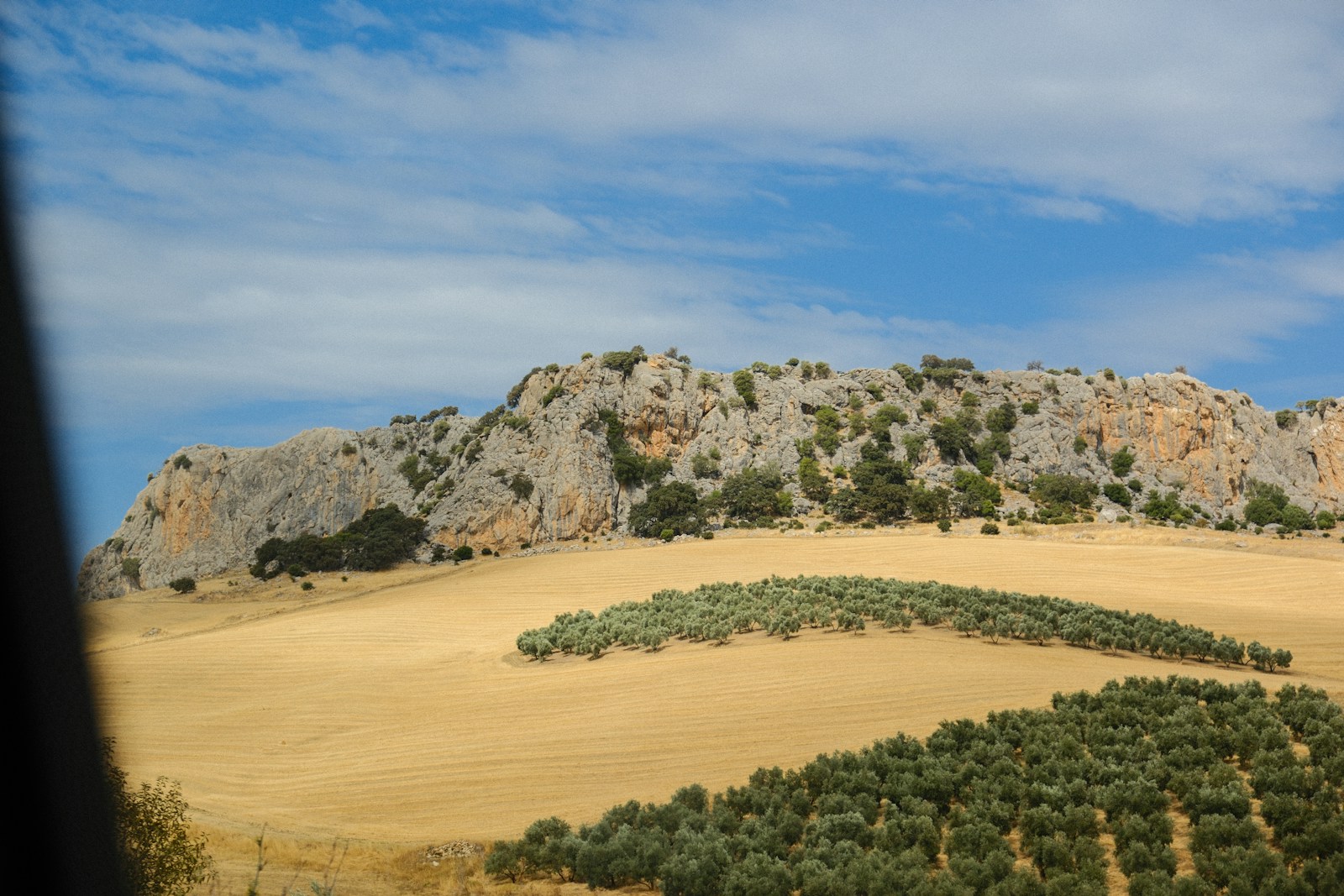
Limestone, clay and sandy loam appear in the regional research. Soil depth, slope and exposure invite closer attention at each estate.
Reading the landscape
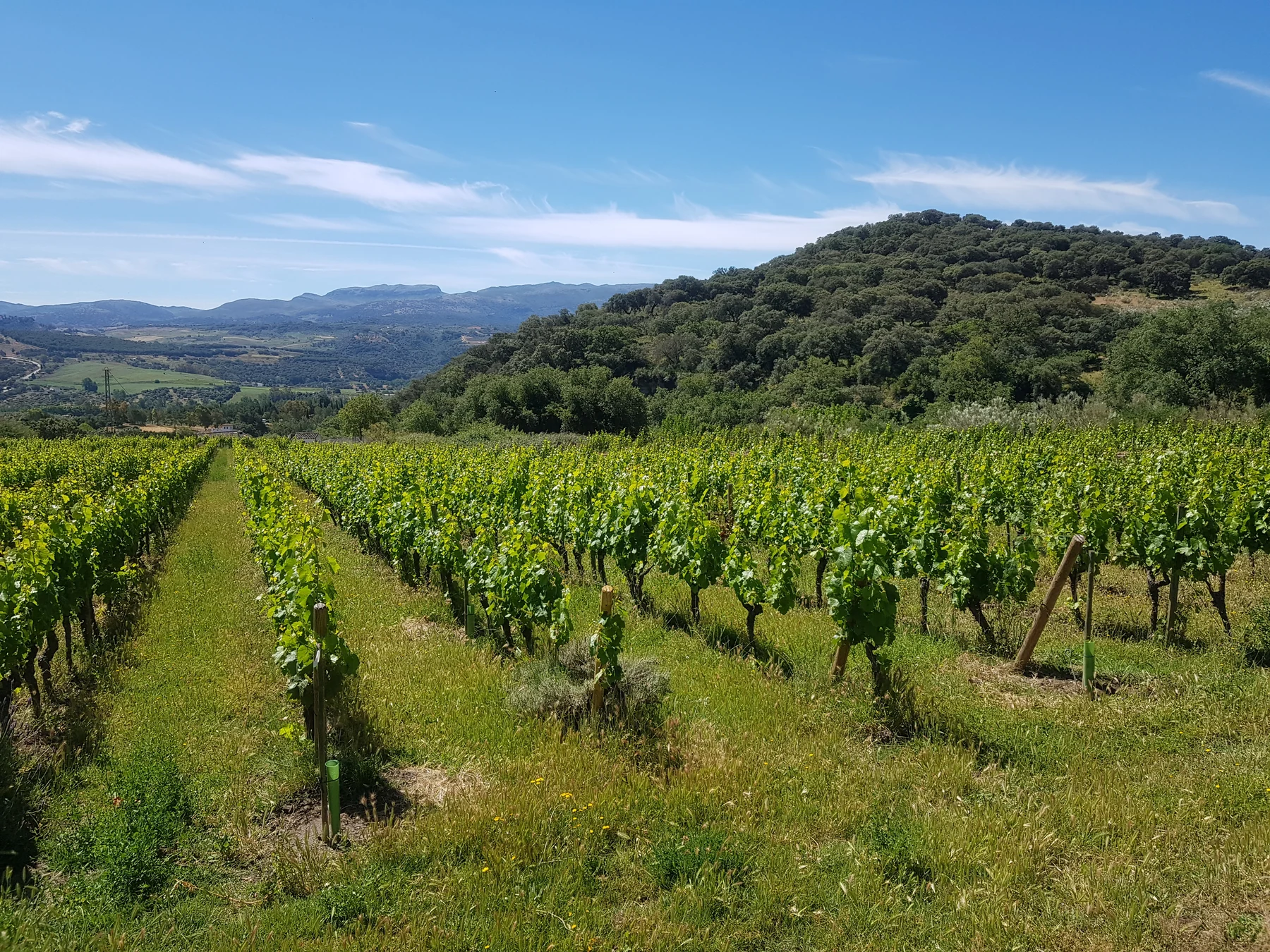
Read the Serranía as a collection of mountain sites around Ronda and its neighbouring villages. Exposure, elevation, grape choice and the timing of harvest all help frame a conversation with the producer; the scenery alone cannot explain the wine.
Fine lees & bâtonnage
Parcel & varietal focus
Concrete & larger wood
Read the regional and producer sources: La Melonera — producer account of historic-grape recovery · Sierras de Málaga council — Serranía de Ronda
A cultural landscape
The story around the glass.
The conservation of scarce grape varieties gives contemporary wines a tangible link to the past. A recovered variety should be understood on its own terms, without implying that all winemaking in the region disappeared. Our heritage guide introduces the different histories behind the word revival.
Explore Andalusia’s wine historyPlanning a rewarding visit
- 01Book a winery appointment before setting out; small estates may be occupied in the vineyard or cellar.
- 02Ask whether the visit includes the vineyard, the production cellar, a tasting, or a combination.
- 03Leave time for the place as well as the wine. Confirm accessibility, language and transport arrangements directly.
People behind the landscape
Producers to explore.
A selection from the regional directory. Each profile brings together its wines, visitor information and source links so you can continue the conversation with the producer.

Ronda
Descalzos Viejos
- Grapes
- Chardonnay, Garnacha, Syrah, Merlot, Graciano, Cabernet Sauvignon, Petit Verdot
- In the cellar & vineyard
- Restored convent winery; oak-aged parcel wines; Botrytis-affected sweet Garnacha documented.
Ronda
F. Schatz
- Grapes
- Chardonnay, Pinot Noir, Lemberger, Muskat-Trollinger; others vary
- In the cellar & vineyard
- Organic/biodynamic approach; native fermentation; fine-lees ageing and bâtonnage, including reds.

Ronda
Cortijo Los Aguilares
- Grapes
- Pinot Noir, Petit Verdot, Tempranillo, Garnacha; Garnacha Blanca, Vigiriega, Viognier
- In the cellar & vineyard
- High-altitude vineyards; parcel/varietal focus; oak ageing.

Ronda
La Melonera
- Grapes
- Romé, Tintilla, Melonera, Blasco; Syrah in some blends
- In the cellar & vineyard
- Recovery of rare Andalusian varieties; concrete eggs and large French oak foudres in selected wines.

Ronda
Kieninger
- Grapes
- Blaufränkisch, Pinot Noir, Malbec, Cabernet Franc, Cabernet Sauvignon, Chardonnay, Garnacha, Tintilla
- In the cellar & vineyard
- Organic farming and small-scale, low-intervention winemaking.
La Cimada / Ronda
Morosanto
- Grapes
- Cabernet Sauvignon, Syrah, Tempranillo, Petit Verdot, Tintilla de Rota, Viognier, Chardonnay
- In the cellar & vineyard
- Estate fruit at altitude; red-wine ageing; archaeological setting.
About this guide’s sources
Regional introductions combine the supplied research with linked council and producer sources. Winery profiles distinguish the original directory snapshot from subsequent source checks. Soil descriptions provide regional context and do not establish a parcel analysis for every estate. Read the editorial approach.
An optional academy experience
Explore this region
through four wines.
This flight follows the decisions behind the wine. Compare grape identity, ripeness and tannin; explore what fine lees, concrete eggs and large oak vessels can contribute. The aim is to understand how very different producers make convincing wines in the same mountain region.
01Illustrative selection
A mountain white with texture
F. Schatz
Chardonnay, subject to the current selection
Fine lees, balance and the difference between body and oak flavour.
At the table
A small wedge of local goat’s cheese
02Illustrative selection
Pinot Noir in southern light
Cortijo Los Aguilares
A Pinot Noir-led selection
Fruit ripeness, acidity and the grain of tannin.
At the table
Mushrooms cooked with thyme
03Illustrative selection
The recovered-grape conversation
La Melonera
A current native-variety blend
What a blend can reveal — and what it cannot prove — about rare grapes.
At the table
Roasted peppers with a savoury dressing
04Illustrative selection
A Central European accent
Kieninger
Blaufränkisch-led wine where available
Compare structure and aromatic character with Pinot Noir.
At the table
A small slow-cooked pork tapa or lentils with mushrooms
An illustrative four-bottle teaching flight. Actual producers, cuvées, vintages and pairings are confirmed for your session according to availability and dietary requirements. Featured producers are educational references; no partnership or winery visit is implied.
Request this signature flightExplore the decisions
What changes the wine?
Rare-grape recovery
La Melonera provides a concrete example of reviving Romé, Tintilla, Blasco and Melonera, with varieties and blends depending on the wine.
Fine lees & bâtonnage
F. Schatz is recorded for fine-lees work, including reds: a useful way to discuss texture beyond the amount of oak.
Parcel & varietal focus
Cortijo Los Aguilares invites comparison of grape identity and site selection in a high-altitude setting.
Concrete & larger wood
Selected La Melonera wines use concrete eggs and large French oak foudres; compare vessel effects without assuming the same process across the portfolio.
Learning outcomes & suggested tapas
- Assess ripeness, acidity and tannin as separate dimensions.
- Compare international grapes with recovered local varieties.
- Explain how lees, concrete and oak may shape texture.
- Distinguish an estate’s published farming approach from a verified current certification.
Local goat’s cheese
A restrained opening pairing for the white-wine comparison.
Thyme mushrooms
A savoury partner for the two contrasting red-grape expressions.
Slow-cooked pork or lentils
A richer final tapa for structured reds, with a plant-based alternative.
Pairings are examples. Dietary requirements are discussed before the menu is confirmed.